

The world of football was turned on its head this past weekend when League Two side Crawley Town made a decision that sent shockwaves through the sporting community. In an unprecedented move that blurred the lines between celebrity culture and professional football, the Reds named reality television star Mark Wright on the bench for their FA Cup third-round tie against Championship giants Leeds United. It was a moment that had fans, pundits, and analysts scrambling for context, questioning whether this was a brilliant marketing stunt or a genuine managerial gamble by a club looking to create a fairy tale story.
This match, which was already a David versus Goliath encounter, suddenly became the hottest topic in English football. For those unfamiliar with the dynamic, Six6s has been closely following the narratives of clubs that dare to be different, and Crawley Town’s decision certainly fits that bill. The inclusion of a reality TV personality, best known for his appearances on “The Only Way is Essex” and his dance prowess on “Strictly Come Dancing,” on a professional substitutes bench was a move that defied conventional logic. It raised immediate questions about the nature of football meritocracy and the increasing influence of entertainment value within the sport.
The Background: From Reality TV to the Professional Pitch
To understand the magnitude of this story, one must first understand the career trajectory of Mark Wright. While he is a well-known media personality, his connection to football is not entirely new. Wright, who turns 36 this month, had a brief spell in non-league football during his youth. However, his professional footballing career never took off, and he eventually transitioned into the world of television, where he found significant fame and fortune.
The idea of a 36-year-old reality star making a professional football bench might seem absurd to purists, but Crawley Town saw an opportunity. The club, currently competing in the fourth tier of English football, has a reputation for thinking outside the box. Under the ownership of WAGs Paul and Karen Smith, the club has often sought the spotlight, and signing Wright as a “club ambassador” earlier in the season was seen as a commercial move. However, naming him as a substitute for an FA Cup match against a Premier League-bound side like Leeds United was a different beast altogether.
Managerial Logic or Publicity Stunt?
The decision was announced just hours before kick-off, with Crawley manager Scott Lindsey defending the move in his pre-match press conference. Lindsey stated that Wright had been training with the squad for several weeks and had impressed the coaching staff with his fitness levels and dedication. He claimed that the decision was purely based on Wright’s form in training and his ability to provide cover for the team.
“It’s a simple football decision,” Lindsey said, attempting to downplay the controversy. “Mark has been in training with us, he’s fit, and he’s been showing the right attitude. We have a few injuries, and he’s earned his place on the bench. It’s as simple as that.”
To the seasoned football observer, this explanation felt hollow. Crawley Town has a full squad of professional footballers who have dedicated their lives to the game. To suggest that a 36-year-old former amateur, whose recent physical activity involved reality TV challenges, was a better option than a contracted professional seemed to stretch credibility. Yet, in the modern era where content is king, the rationale becomes clearer: the story itself was the prize.
The Match Day Experience: A Frenzy at Elland Road
The atmosphere at Elland Road on match day was electric, but not solely because of the football. The presence of Mark Wright on the team sheet transformed the pre-match buzz into a media circus. Cameras that would normally be focused on Leeds United’s stars like Patrick Bamford or Crysencio Summerville were instead panning to the Crawley Town bench, waiting for a glimpse of the reality TV star.
Leeds United, managed by Daniel Farke, were firm favorites. They are a club with a rich history, passionate fans, and aspirations of returning to the Premier League. Facing a League Two side in the cup is traditionally a chance for lower-league players to shine. Instead, the narrative was hijacked by a celebrity.
The First Half: Professionalism Prevails
As the whistle blew for the first half, the game itself was a stark reminder of the difference in class between the two sides. Leeds United dominated possession from the first minute. Their movement off the ball was crisp, their passing was incisive, and they quickly asserted their physical superiority. Crawley, to their credit, defended resolutely, but it was a matter of time before the quality told.
The first goal came in the 23rd minute via a well-worked corner, headed home by center-back Charlie Cresswell. The Leeds fans roared, but there was an undercurrent of distraction in the air. Every time a Crawley player went down for treatment or a substitution was made, the crowd would go quiet, half expecting to see Wright warming up. The entertainment factor of the game itself was being overshadowed by the circus on the bench.
The Second Half: The Wait for Wright
The second half began with Leeds increasing the pressure. They added a second goal through a stunning strike from midfielder Darko Gyabi, and a third shortly after from Willy Gnonto. At 3-0 down, the tie was effectively over. It was at this point that the crowd’s focus shifted entirely to the Crawley bench.
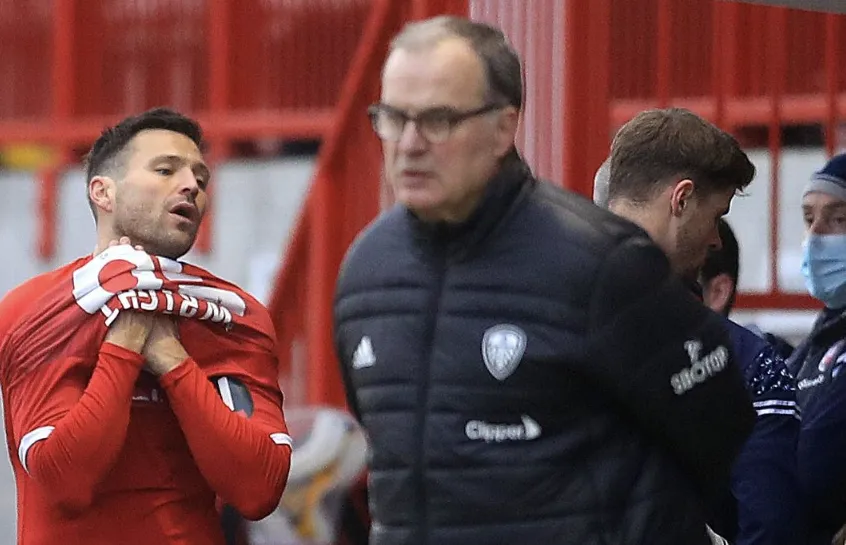
Cameras showed Wright looking focused, following the game intently, and occasionally speaking with the coaching staff. He looked the part, wearing the club tracksuit and appearing physically fit. But the question on everyone’s mind remained: would he get on the pitch? As the 70th minute approached, the chants began. Leeds fans, in a taunting yet curious tone, started singing “We want Wright! We want Wright!” This was a surreal moment for the FA Cup, a competition known for its giant-killings and romantic stories, not for celebrity cameos.
The 85th Minute: Reality Meets Football
With five minutes of normal time remaining and Crawley trailing 4-0, the moment finally arrived. The fourth official held up the number 33, and Mark Wright stripped off his tracksuit. Elland Road erupted in a mix of laughter, applause, and disbelief. He was replacing a winger, a tactical move that seemed to serve no purpose other than to give the reality star his moment.
Wright jogged onto the pitch, clapping his hands and looking eager. His first touch of the ball was a simple back pass to his center-back, which he executed cleanly. He then made a few runs, trying to get involved, but the pace of the Championship game was clearly a step above his current level. In the dying minutes, he had a shot—a weak, scuffed effort that was easily gathered by the Leeds goalkeeper.
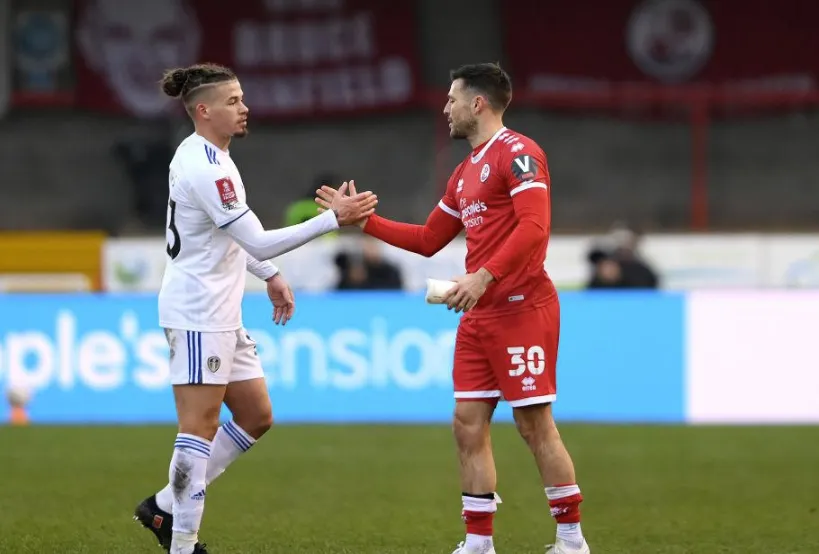
When the final whistle blew, Wright immediately walked over to the Crawley fans, applauding them, and then shook hands with the Leeds players. It was a bizarre end to a bizarre day.
Analysis and Reaction: A Step Too Far?
The aftermath of the match saw a massive divide in opinion. On social media, the event was a viral sensation. Clips of Wright’s debut were shared millions of times, and Six6s noted a significant spike in engagement surrounding Crawley Town’s brand. From a marketing perspective, the move was a genius stroke. Crawley Town was trending globally, and their name was linked with the iconic FA Cup.
However, the backlash from the football purists was severe. Many former players and pundits expressed their dismay. Gary Neville, speaking on his podcast, called it “a disrespect to the FA Cup and to the professional footballers who have trained their whole lives for a chance like this.” He argued that the FA Cup should be a meritocracy, not a platform for celebrity stunts.
The Perspective of the Professionals
The Crawley Town players themselves seemed divided. Several squad players, who were left out of the squad to make room for Wright, were reportedly unhappy. One anonymous source from the club was quoted in the local press saying, “It’s hard to take. Some of the young lads in the academy have been dreaming of a day like this, scoring at Elland Road in the FA Cup. To see a TV star take that spot… it’s demoralizing.”
Conversely, the senior players in the dressing room seemed to understand the commercial necessity. The club is not wealthy, and the publicity generated by this move could translate into significant revenue and exposure, which in turn could fund the actual football operations. It is a cynical view, but in modern football, it is often the reality.
The Bigger Picture: The Future of Football Entertainment
This event raises serious questions about the future of football. As leagues become more corporatized and the demand for content increases, where do we draw the line? Are we fans of the sport, or are we consumers of entertainment? Crawley Town’s decision to play Mark Wright feels like a canary in the coal mine for the direction of the game.
Clubs lower down the football pyramid are struggling to survive. The financial gap between the Premier League and the rest is a chasm. To survive, clubs must innovate. If naming a reality TV star on the bench brings £1 million worth of free advertising, can we really blame them? From a business perspective, it is a rational decision.
However, this logic undermines the very soul of the sport. Football’s beauty lies in its unpredictability and its merit. A plumber from a non-league side can score the winner against a Premier League giant because he has dedicated his life to the game. That purity is lost when a celebrity is parachuted in for a PR stunt.
What Does This Mean for Mark Wright?
For Mark Wright, this was a box ticked. He played professional football. Despite the criticism, he achieved a dream that many people hold but few realize. He will likely never play a significant role again, but his name will forever be in the FA Cup history books. He handled the media scrutiny well, stating after the game, “I know the critics will have their say, but I trained hard, the manager said I was good enough, and I got to play in the FA Cup. It’s a dream come true.”
Conclusion: A Day to Remember for All the Wrong Reasons
The Six6s analysis team believes this match will be remembered not for the scoreline, but for the precedent it set. Leeds United advanced to the next round of the FA Cup comfortably, but the story of the day was Crawley Town’s Mark Wright. It was a moment that perfectly encapsulated the tension between tradition and modernity in football.
For fans of Leeds United, it was a comfortable win that allowed them to rest key players for their league campaign. For fans of Crawley Town, it was a mixed bag of pride in the exposure and frustration at the trivialization of their club’s competition. For the neutral observer, it was peak modern football—wild, confusing, and undeniably entertaining.
We want to hear your take on this! Was Crawley Town right to give Mark Wright a chance, or did it devalue the FA Cup? Share your thoughts in the comments below, and don’t forget to explore our other analysis articles for more in-depth sports coverage.
